Production Skills
Learn technologies used to build, automate, and deploy real production systems.

AWS deployment with Docker, Terraform & CI/CD - taught by building one complete, real system, not isolated demos.
You already know how to write the code. This closes the gap between localhost and a system a company would trust you to run.
You write features. You've never owned the deploy.
Comfortable in the codebase, unfamiliar with the VPC.
At least one project running on your machine. Zero in the cloud.
You need proof of production work, not another certificate of attendance.
The role you want assumes you can run what you build.
This is not a learn-to-code-from-zero course. Bring working code.
You will take a production-ready full-stack application and deploy it to AWS.
The application is already provided - this is not a coding course.
A production-ready Sprint / Kanban web application built with:


Containerize each service, automate the entire deployment pipeline, and run everything on AWS.
Every technology in this course is used daily in real production engineering teams.


By the end of the course, you will have a fully deployed, scalable AWS system running in production-style architecture.
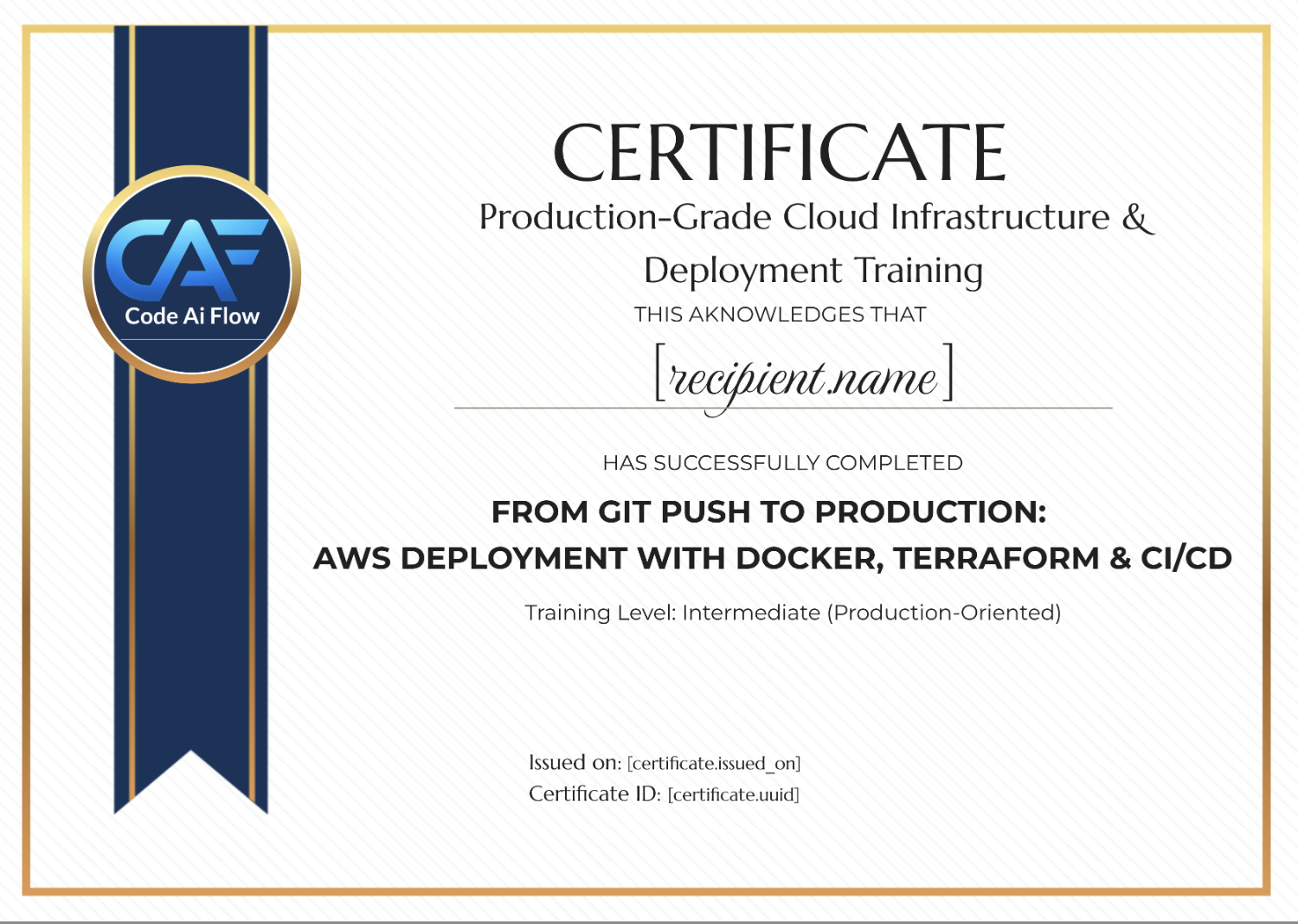
A professional certificate verifying your training and practical engineering skills - publishable to LinkedIn in one click.
90% of Fortune 500 companies rely on AWS, and Terraform is the #1 tool for Infrastructure as Code. These are practical skills that remain valuable across projects, companies, and roles.
Learn technologies used to build, automate, and deploy real production systems.
The same stack is widely used by startups, scale-ups, and enterprise engineering teams.
Infrastructure, automation, and cloud skills remain valuable regardless of frameworks or AI trends.
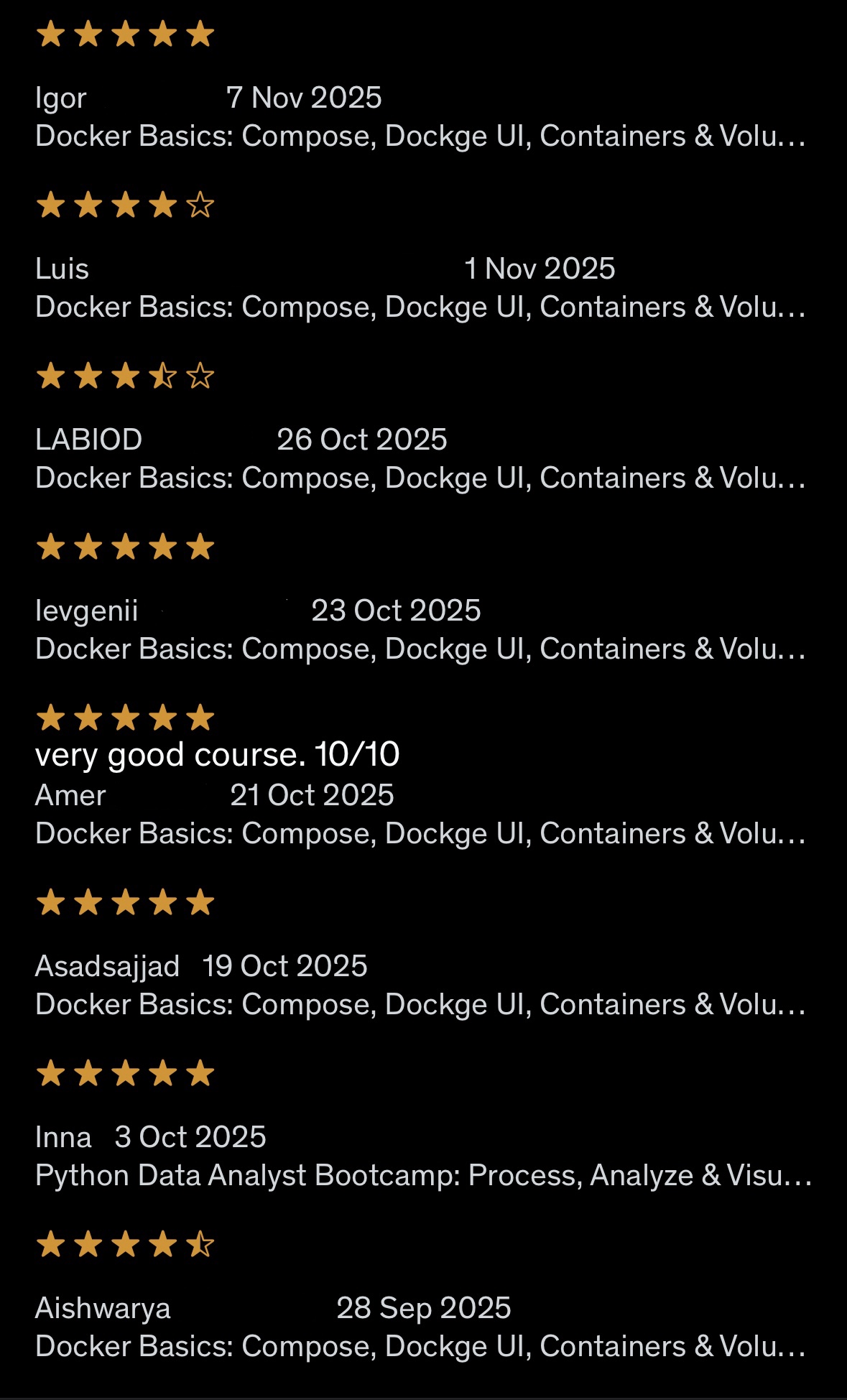
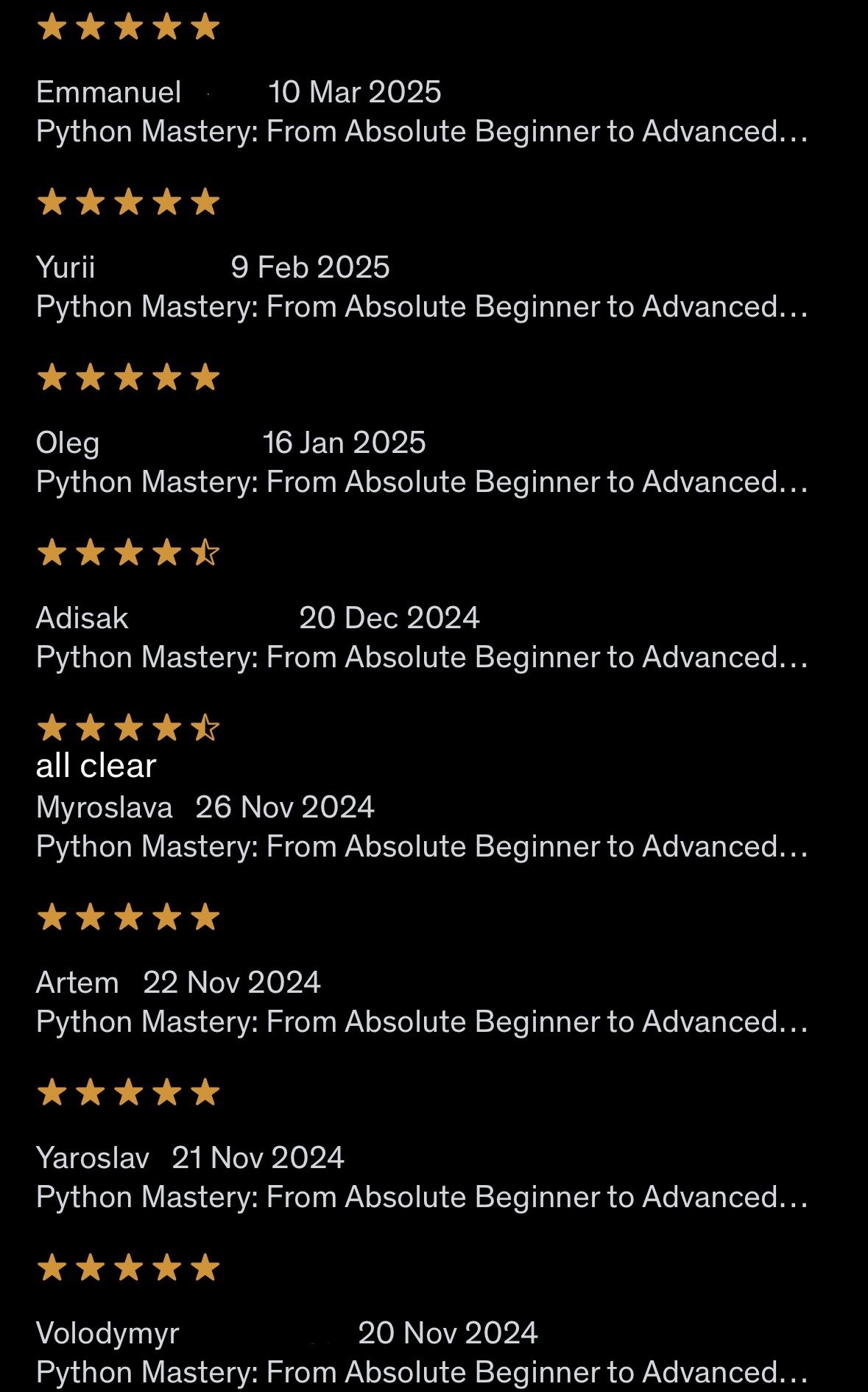
Job titles are temporary, full-cycle skills are permanent. As AI automates coding, the ability to orchestrate complex environments becomes your ultimate competitive edge.
Other industry reports show typical ranges between $125,000 and $155,000 per year, depending on experience and specialization.
Most cloud courses teach tools individually. This program teaches how they work together in a real production system.
By the end of the program, you'll have:
One program, full access. Pay once or split into two - same content, same bonuses.
Pay once and get access to the program.
Start Learning →Start immediately and spread the cost over two payments.
Choose Flexible →You're not just getting a course-you'll leave with a complete set of production-ready assets you can use long after finishing the program.
Long-term assets you keep after the program.
 Discord community
Try the course with confidence.
If the program is not the right fit for you, you can request a full refund within 5 days of purchase. This policy is designed to give you peace of mind while ensuring fair access to course materials.
If you've learned tools but still can't deploy a real system - this course closes that gap. Build and run production-ready infrastructure end to end.
Practical details for deciding whether this course is the right fit.
Junior to mid-level developers, backend engineers, and IT professionals who want to learn how applications are actually deployed to AWS in production environments.
No prior AWS experience is required. Basic familiarity with the command line and a programming language is helpful, but everything cloud-specific is taught from the ground up.
No. Terraform is explained from the ground up with simple examples before moving into real project infrastructure.
Most students complete the core deployment path in 3-5 weeks at a comfortable pace. You can move faster or slower - all materials remain available.
Yes. You provision real AWS resources with Terraform - VPCs, subnets, load balancers, ECS services, databases - not toy examples or simulators.
Helpful but not required. The course covers everything you need to containerize and deploy applications with Docker.
It's designed for developers who already write code. If you've shipped at least one application locally, you're ready. We focus on bridging the gap to production.
You will have access to technical support throughout the course. If something doesn't work as expected, you can reach out and get guidance to help you move forward.
This is not a beginner-level course, but it is structured step-by-step. If you already have basic development or technical experience, you will be able to follow the process and build real infrastructure systems.
Modern software still runs on infrastructure. Systems need to be deployed, configured, secured, and maintained. Skills in cloud, containers, and deployment remain foundational to how real production environments operate.
You have a 5-day refund window. This gives you time to review the material and make sure the course matches your goals.
No dedicated DevOps background is required. Familiarity with development workflows or basic infrastructure concepts is helpful, but everything is explained in a structured and practical way.
The course is fully self-paced. You follow step-by-step lessons and implement everything at your own speed, building a real system along the way.
You will work with a complete microservices project.
Backend: Node.js, TypeScript, Express, Prisma, Jest, bcryptjs, jsonwebtoken, cors, morgan, express-validator
Frontend: Next.js, React, TypeScript, Tailwind CSS, Radix UI, @dnd-kit, Recharts, Jest
Database: PostgreSQL, Prisma
By the end of the course, this project is fully deployed to the cloud with automated infrastructure and CI/CD setup.
You control your pace and workload throughout the program.
For installment plans, content is released progressively over a 2-month period.